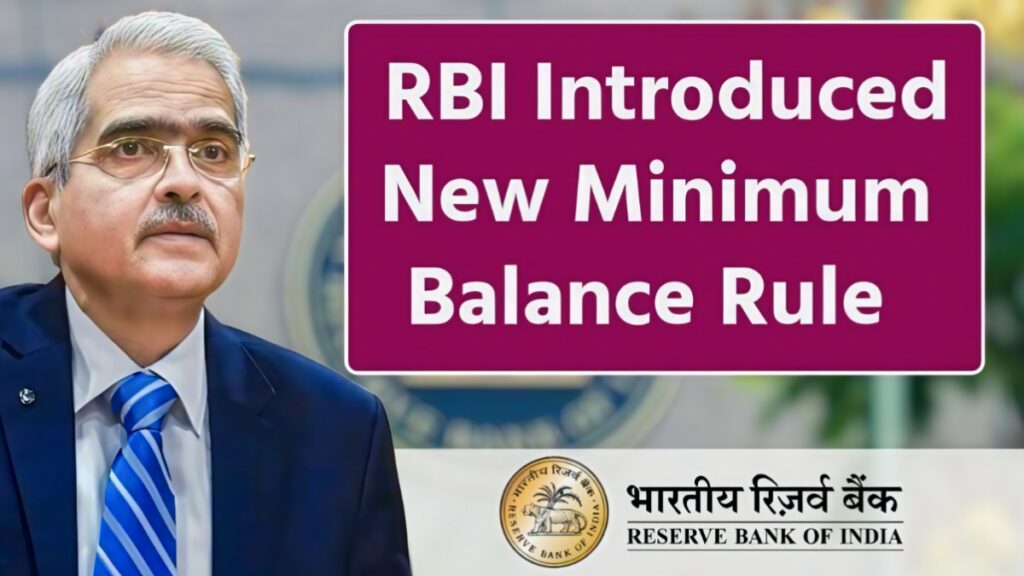
New Minimum Balance Rules: India’s banking habits are quietly but steadily heading for another reset. From January 2026, the Reserve Bank of India (RBI) plans to enforce clearer and more uniform minimum balance norms across banks, a move that could directly affect millions of account holders. For years, customers have complained about sudden penalties, unclear balance requirements, and wildly different rules across banks and account types. The new framework aims to bring order to that confusion.
Minimum balance rules may sound routine, but for salaried workers, pensioners, students, and small traders, they often determine whether an account remains affordable or becomes a source of monthly deductions. RBI’s proposed changes come at a time when financial inclusion has expanded rapidly through Jan Dhan accounts and digital banking, yet complaints about balance-related charges continue to surface. The 2026 rules are meant to balance bank sustainability with customer protection—an attempt to make everyday banking feel less like a guessing game.
Why the RBI Is Reworking Minimum Balance Norms
The push for new minimum balance rules did not emerge overnight. Over the past decade, banks—especially private lenders—have revised balance requirements multiple times, often without clear communication. Customers frequently discover penalties only after seeing deductions in their statements. RBI has taken note of rising grievances flagged through banking ombudsman reports, many of which revolve around unclear charges and inconsistent balance thresholds.
Another driver is the changing structure of Indian banking. With more digital accounts, bundled services, and fintech partnerships, the old one-size-fits-all approach has stopped working. According to RBI officials, the new norms are meant to standardise disclosure and accountability rather than fix one universal balance amount. Banks will still have flexibility, but customers will know upfront what is expected and what happens if they fall short.

Who Stands to Be Affected the Most
Savings account holders form the largest group likely to feel the impact. Urban customers often face higher minimum balance requirements compared to rural account holders, and this gap is expected to remain. However, RBI’s emphasis on transparency could make it harder for banks to quietly raise thresholds or levy steep penalties without adequate notice.
Small business owners and current account users may also see changes. These accounts typically carry higher balance requirements due to frequent transactions. Under the new framework, banks will need to clearly justify penalties and link them to actual service costs. For pensioners and students—groups traditionally sensitive to balance requirements—banks may be nudged to offer more customised or low-penalty options.
Penalty Structure: Less Surprise, More Disclosure
Penalties for non-maintenance of minimum balance are not going away, but RBI wants to make them more predictable. Instead of arbitrary deductions, banks will have to disclose penalty slabs in advance and communicate them periodically. This is particularly important for customers who operate on tight monthly budgets and cannot afford sudden charges.

A senior banking analyst, R. Mahesh Iyer, explains, “The issue was never penalties themselves, but the lack of clarity. When customers know the rules, they can plan better. RBI’s intervention forces banks to treat minimum balance penalties as a disclosed service condition, not a hidden revenue stream.” The intent is to reduce friction while still allowing banks to recover operational costs.
What Happens to Zero-Balance and Jan Dhan Accounts
Zero-balance accounts, especially those opened under the Pradhan Mantri Jan Dhan Yojana, will continue to enjoy protection. RBI has reiterated that financial inclusion remains a priority and that such accounts will not suddenly be burdened with balance requirements. However, banks may tighten conditions around additional services linked to these accounts.
For example, unlimited free transactions or premium debit cards may come with eligibility criteria. This approach mirrors global trends, where basic accounts remain free, but add-on services carry conditions. The 2026 rules are expected to clearly separate core banking access from optional features, helping customers choose accounts that truly suit their needs.

Digital Banks and Fintech Platforms Under the Lens
Digital-only banks and fintech-backed neo-banking platforms have grown rapidly by offering convenience and sleek interfaces. However, many users are unaware that these accounts often partner with traditional banks and are subject to similar balance norms. RBI’s new guidelines will explicitly cover such arrangements, closing regulatory gaps.
This could mean stricter disclosure on app dashboards, clearer alerts when balances fall below thresholds, and uniform communication standards. While some fintech platforms may continue offering low or zero balance options, experts believe penalty transparency will become non-negotiable. In the long run, this could strengthen trust in digital banking rather than slow its growth.
Looking Ahead: What Customers Should Expect Next
Between now and January 2026, banks are expected to gradually update their account terms and communicate changes to customers. RBI is likely to issue detailed circulars outlining compliance timelines and customer communication standards. For account holders, this transition period is an opportunity to review existing accounts and assess whether they still make financial sense.
Industry watchers predict more account segmentation, with banks offering clearer choices—higher balance accounts with bundled perks, and low-cost accounts with basic features. If implemented well, the new minimum balance rules could reduce friction and restore some trust in everyday banking. The real test will lie in enforcement and how strictly RBI monitors compliance.
Public Sentiment and the Bigger Policy Picture
Public reaction so far has been mixed. While many welcome the promise of transparency, some fear banks will simply restructure charges under new names. Social media discussions suggest customers want RBI to cap penalties rather than only regulate disclosure. Whether the central bank goes that far remains to be seen.
From a policy standpoint, the 2026 minimum balance overhaul fits into RBI’s broader effort to modernise banking without diluting consumer protection. As India’s financial system becomes more complex, rules that prioritise clarity may prove just as important as interest rates or credit growth targets.
Disclaimer: This article is based on regulatory discussions, policy signals, and industry analysis available at the time of writing. Final RBI notifications, bank-specific rules, and implementation timelines may differ. Readers are advised to check official bank communications or consult financial professionals before making decisions related to account management or minimum balance requirements.